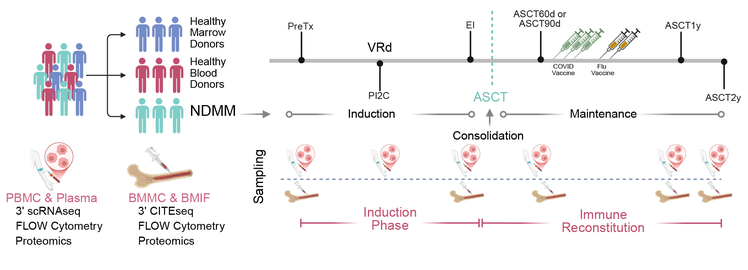
Multiple myeloma (MM) is a bone marrow resident plasma cell malignancy that causes clinical manifestations including hypercalcemia, renal dysfunction, anemia and osteolytic bone lesions. To study the immune and hematopoietic abnormalities across disease and treatment, we generated and analyzed longitudinal multi-omic profiling of matched bone marrow and peripheral blood from MM patients across diagnosis, induction, autologous stem cell transplant (ASCT), and recovery.
For full details about this study, see our preprint on bioRxiv:
Chander A, Rachid Zaim S, Dillon MA, Genge PC, Moss N, McGrath PI, et al. Myeloma and therapy reshape the bone marrow niche to durably constrain immune reconstitution and vaccine responsiveness. bioRxiv; 2026. p. 2026.04.08.717307. doi:10.64898/2026.04.08.717307
Findings Highlight:
Over the course of the study, 13.3% of the patients progressed, whereas 66.7% achieved a complete or stringent complete response, and 60% improved their response over the course of therapy. We also identified persistent immune dysfunction obscured by patient heterogeneity. We found the tumor imposes a compartment-specific immune program where the marrow exhibits metabolic and inflammatory changes that bias hematopoiesis and alter cytotoxic effector programs not mirrored in blood, with adaptive immune reconstitution impaired up to two years post-ASCT. These findings define how myeloma and its treatment durably reshape immunity from the marrow outward.
For additional details about the cohort, experimental methods, citation and contributors, and dataset downloads, see the subsections of this project listed on the left
Multiple Myeloma Differential Expression
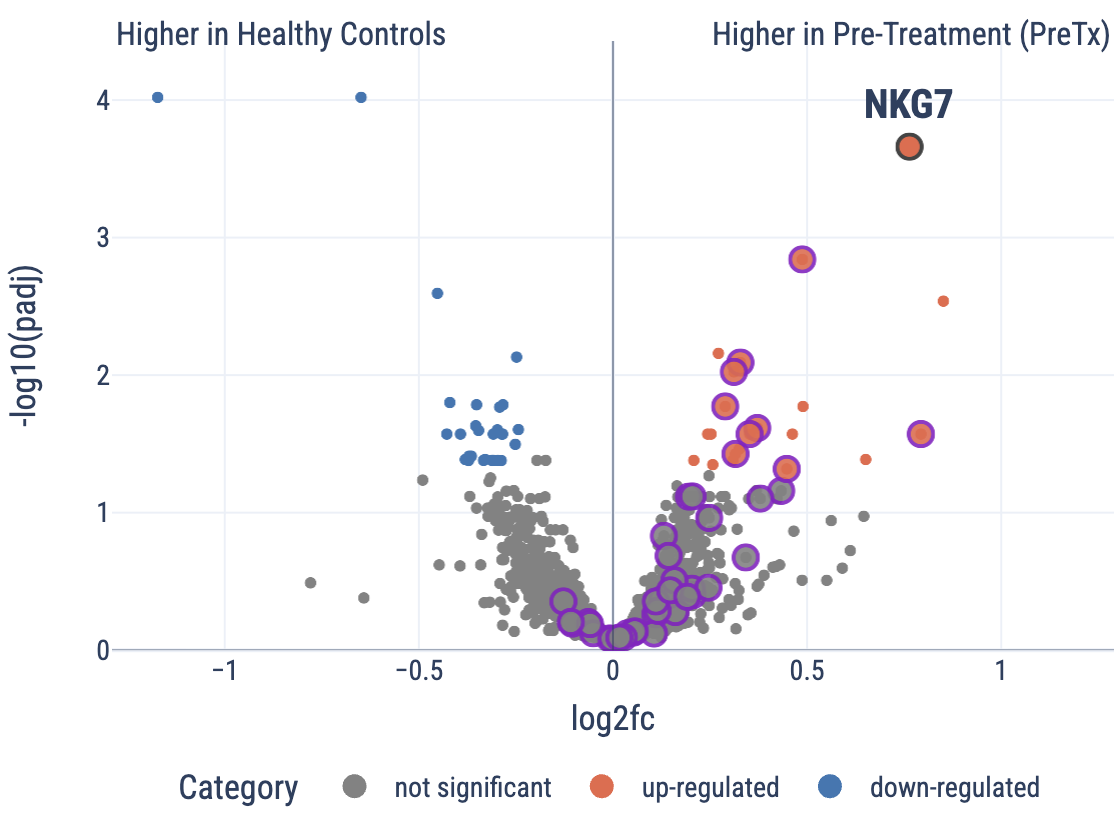
Explore changes in gene expression induced by MM compared to healthy subjects, and changes to expression over the course of treatment in both bone marrow and peripheral blood.
Explore Bone Marrow DEGs Explore Peripheral Blood DEGsMultiple Myeloma BMMC UMAP Explorer
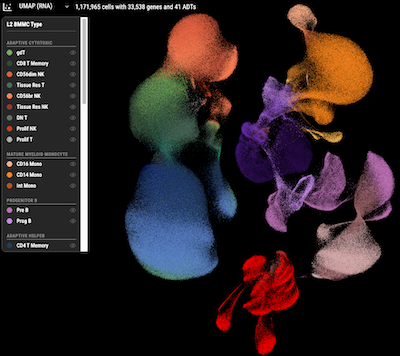
Interactively explore transcription and cell surface marker expression in > 1.1 million BMMCs and tumor cells from healthy controls and NDMM patients across the treatment and transplant time course.
Explore BMMC UMAPMultiple Myeloma Tumor UMAP Explorer
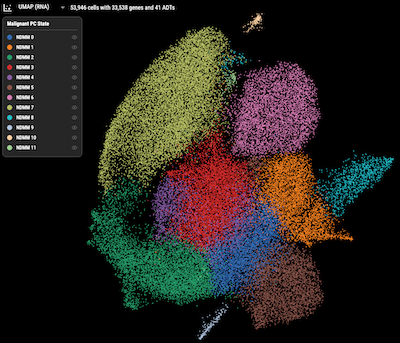
Interactively visualize heterogeneous tumor cell states across subjects with >50,000 tumor cells profiled with both transcription and surface marker expression.
Explore Tumor UMAP